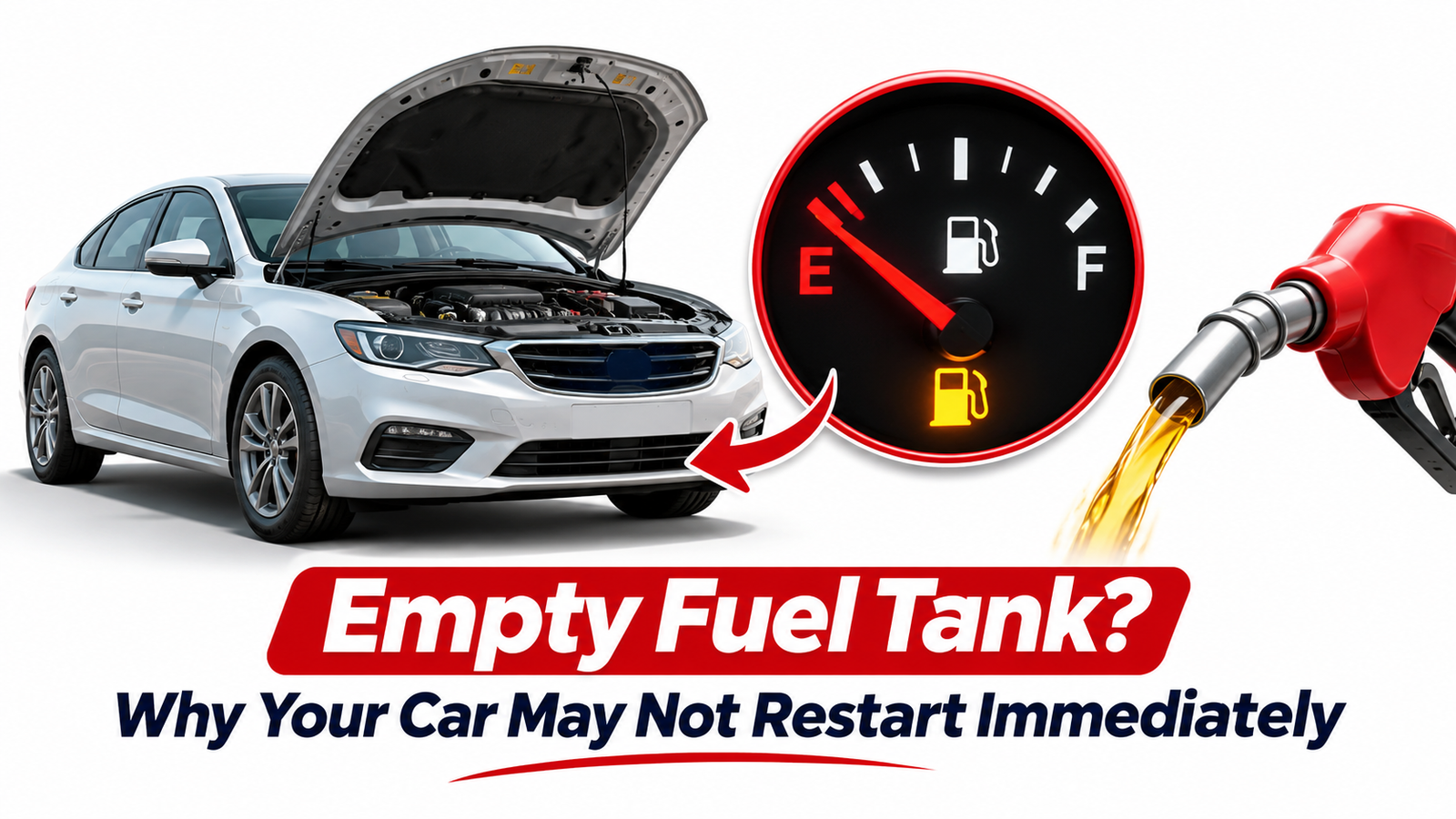
Empty Fuel Tank? Why Your Car May Not Restart Immediately
When car run low on petrol, you could end up in danger of being stuck somewhere, but if you fill up your car and you can’t get it started, the situation only gets worse. This may be the vehicle starting as soon as fuel is put into the tank, but in some cases more steps are needed to revert to normal fuel delivery.
An empty gas tank will disrupt fuel service, can let air into some fuel systems, and can exacerbate an existing battery or fuel pump issue.
Here are some of the most popular causes a car might fail to restart after going out of petrol, the steps to get it moving, and the symptoms you should inspect if the engine still won’t start.
Why Your Car May Not Restart After the Fuel Tank Runs Empty
Fuel starvation occurs when the engine is deprived of petrol/diesel fuel. Your car might not turn over right away after refueling, as the fuel system will require some time to return to normal fuel delivery operations. The following five are likely explanations.
1. The Fuel System Needs to Restore Pressure
Fuel pumps help modern petrol engines to pump petrol into the injectors at the right pressure. If the tank goes empty, the fuel is shut off. Fuel pressure may have to be rebuilt prior to starting after refueling some vehicles.
2. You Haven’t Added Enough Fuel
If the vehicle is parked on a slope, it may not be sufficient to add a small amount of petrol to ensure correct fuel extraction from the fuel pump. This amount will depend on the type of tank design and vehicle.
3. Repeated Starting Attempts Have Weakened the Battery
If the battery gets discharged every time the car is started with a full gas tank, the fuel pump could fail. If the battery is not charged properly, the starter motor can not drive the engine at the proper speed.
Some signs and symptoms consist of:
- Slow engine cranking.
- Rapid clicking sounds.
- Dim dashboard lights.
- Little or no response when starting.
4. The Fuel Pump May Have Been Affected
There are electric fuel pumps inside the gas tank of many petrol cars. The surrounding fuel cools the pump when it is in operation. This cooling may be diminished by running with an empty tank and can lead to more wear in the pump.
5. An Existing Fuel or Ignition Problem Is Preventing Starting
Running out of fuel can also reveal a problem in the vehicle’s fuel or ignition system. There can also be a problem with the engine sensor, injector, fuel pump relay, or a clogged fuel filter that makes it difficult to start and often impossible.
Read more: What to Do If Your Car Runs Out of Petrol on a UAE Highway

Restart Your Car After Running Out of Fuel
To get fuel pumping and get your petrol car going, try these:
Move to a Safe Location
Turn on your flashing lights and make your way off the road if it is safe to do so. Don’t repair vehicles on the side of a road in an unsafe spot.
Add Enough Petrol
Fill the tank with the appropriate petrol. Do not add just a little amount, and look for the amount that has been suggested by the owner’s manual.
Prime the Fuel System
Cars may also return the fuel pressure when the ignition is turned on. Some may need to be “ignition cycled”. If the manufacturer recommends it, turn the ignition on without starting up, wait a short while, then turn the ignition off, following the manufacturer’s instructions.
Start the Engine Carefully
Attempt to start the engine after the fuel system has developed fuel pressure. Don’t leave the battery cranked for too long or repeat cranking. Don’t over-crank the battery or crank multiple times, because they will drain the battery and overheat the starter motor.
Check Engine Performance
Check for Warning Lights, Unusual Sounds, Hesitate/stall if the engine starts. Contact a mechanic if it still does not start and/or if it runs poorly; they will check the fuel pump, fuel pressure and battery.
Visit: Emergency Petrol Delivery in the UAE

Why Does My Car Crank But Not Start After Refuelling?
When the cranking but not starting condition occurs, the starter motor is rotating the engine, but combustion is not going well.
Possible explanations include:
- Lack of fuel to the engine.
- Non-restored fuel pressure.
- An issue with the fuel pump or relay.
- An ignition-system fault.
- Some type of sensor or engine-management problem.
Read more: Car May Jerk After Refuelling
Can Running Out of Fuel Damage the Fuel Pump?
Yes, if a vehicle is operated for extended periods with minimal fuel or if it is allowed to run out of fuel, the risk of wear to the fuel pump can be higher.
In a modern vehicle, there is an electric fuel pump located in the fuel tank. The cooling and lubrication of the internal parts of the pump is aided by the passage of fuel through the pump.
The pump may have less fuel for cooling when fuel levels are very low. This may lead to overheating and wear if operated continuously.
Can a Diesel Car Restart After Running Out of Fuel?
Running diesel vehicles completely out of fuel may require extra care.
Unlike most petrol-driven systems, some diesel fuel systems need to have diesel in the lines and filters to work.
If the fuel tank gets low, then very easily, air can enter various portions of the fuel system. This can cause fuel to not reach the fuel pump and make it impossible to start the vehicle.
When Should You Call a Mechanic?
If you want a professional “inspection,” please consider if:
- You then add some more petrol and your car still fails to start.
- The engine starts and cranks, but fails to start.
- You hear unusual noises from the fuel pump.
- The engine starts, but it stalls off and on again.
- After trying to start, the battery becomes weak.
- Specialist fuel-system priming is needed for your diesel-powered car.
- You see a fuel leak or smell a fuel leak.
How to Prevent Your Car from Running Out of Fuel
Here are a few easy tips that you should use to prevent running out of gas. These measures can also keep your car’s fuel system protected.
- Don’t drive with a low level of petrol: Avoid this as a usual practice.
- Check fuel gauge: Always check the fuel gauge, especially before going on long trips.
- Don’t solely rely on the reserve warning: Reserve driving range is an estimation and may vary depending on weather and driving conditions.
- Plan fuel stops: If using roads in an area you are not familiar with, know where petrol stations are located.
- Monitor your fuel level visualiser: If the fuel level visualiser is not accurate, have the fuel-level sensor checked.
- Maintain the fuel system in proper condition: Follow service timing and promptly resolve idle problems.

Read more: Petrol Station Queues in Dubai
Frequently Asked Questions
Why won’t my car start after running out of fuel?
Loss of pressure and/or rebuilding of pressure may be necessary; this can cause a supply interruption. There can also be a problem with battery power or fuel pump failure.
What to do if your car has run out of petrol?
Follow the manufacturer’s recommended priming procedure before starting, refuel to the correct level, and park on even ground.
What amount of petrol will I need to fill an empty petrol tank?
This is dependent upon the vehicle. Fill to more than just a drip and follow the guidelines in the owner’s manual for the minimum amount of fuel.
Does a car accelerate straight after it has been fueled?
Yes. Some petrol cars will automatically start up when the power returns, and others may need to have fuel pressure restored and/or be primed.
Final Thoughts
Don’t assume that the fuel pump or engine is damaged if your car won’t start after running out of fuel. The issue could be discontinues fuel supply or a system which requires a pressure restoration. Refuel the car and restart according to car manufacturer’s instructions and do not repeat and extend cranking if needed. If that doesn’t help, take the car to a qualified mechanic for a fuel system/battery inspection.