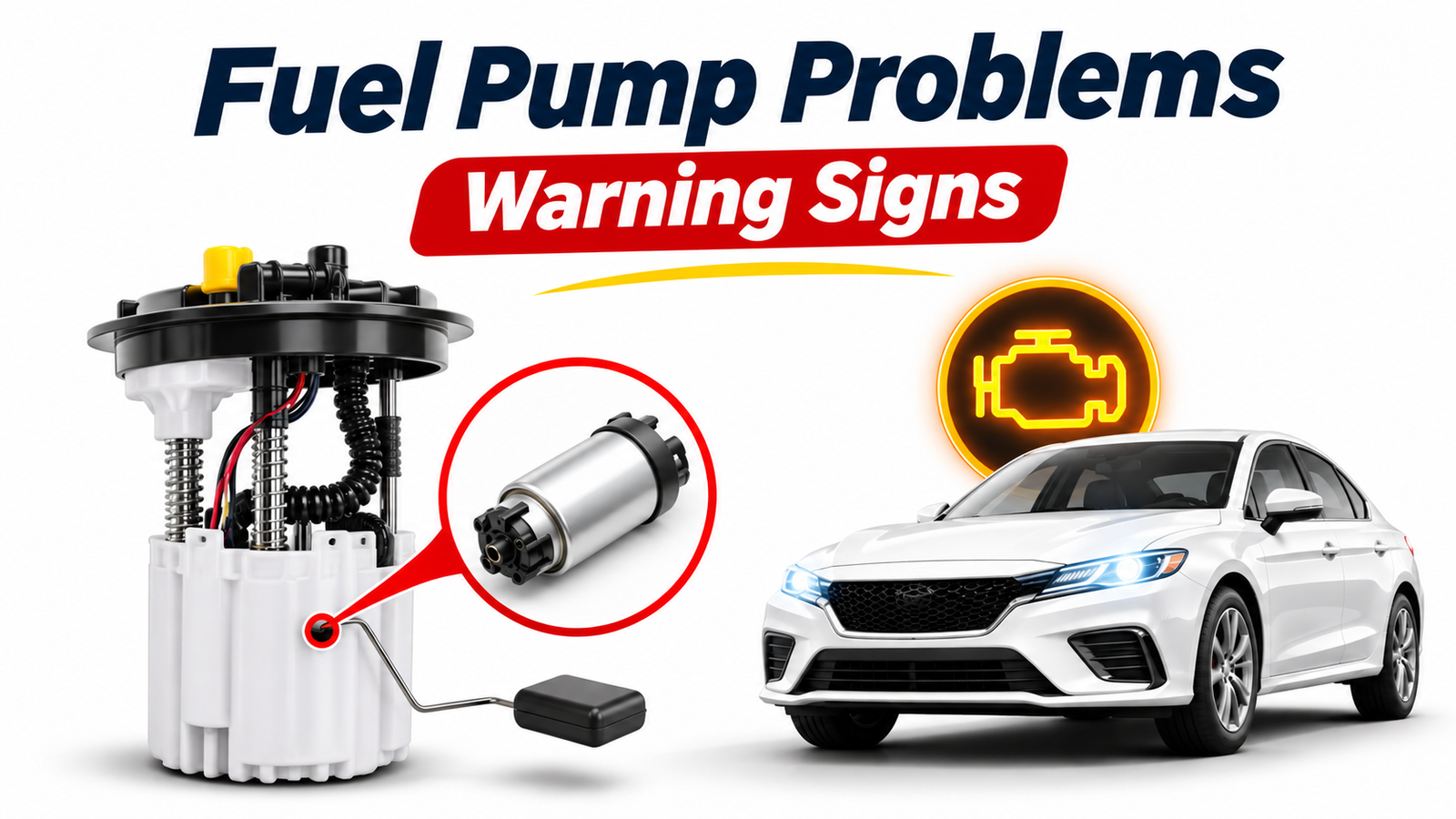
Fuel Pump Problems: Warning Signs Every Driver Should Know
Is your car hard to start, has some difficulty in building up acceleration, or even stops working in a fairly short time? When these trouble codes are present, it may be a sign of fuel pump issues, particularly if they occur frequently or intensify on demand.
If your fuel pump fails, it can have difficulty supplying the fuel pressure and flow your engine requires. Here are some common symptoms of fuel instability: hard starting, hissing or whining sounds by the fuel tank, power loss, engine sputtering, and unexpected stalling.
In this guide, you will learn the signs of a failing fuel pump, why it fails and which times it’s necessary to seek professional diagnostics of the car.
What Does a Fuel Pump Do?
The task of the fuel pump is to propel the fuel through the system at the correct pressure and velocity into the engine for utilization. Petrol cars are now generally fitted with an electric pump, which is sometimes installed within the fuel tank. Some cars have an additional high-pressure pump also.
Many and a variety of different fuel delivery systems are used in diesel engines, and the high-pressure and the low-pressure supply pumps are examples.

10 Common Fuel Pump Problems Symptoms
1. Engine Sputtering or Hesitation
A weak fuel pump can’t deliver enough fuel, causing the car to stall, buck while driving, or stall occasionally.
This symptom is often more prominent when accelerating and under more burdensome engine loads, when there is more demand for fuel.
2. Loss of Power During Acceleration
With a weak fuel pump, one might notice lags in acceleration, especially on steep inclines, when going over banked speeds, or when towing.
Under lighter driving conditions, the engine may run normally, but falter if it requires more fuel.
Other potential issues are suspected filters, ignition issues, exhaust part restrictions, or sensor issues.
3. Hard Starting or Long Cranking
Your engine starts slow if compared with the usual speed? A lack of fuel pressure may be one of the factors.
A weak pump can have problems developing sufficient pressure for start-up. Similar symptoms can be caused by a leaking injector, defective pressure regulator, or an electrical issue.
4. Engine Cranks but Won’t Start
The fuel pump could be pumping the fuel at a level that is too low; it turns over the engine, but it will not start.
A complete failure of the pump can actually prevent fuel from being supplied, whereas blown fuses, a faulty relay, damaged wiring, ignition trouble, or problems with the crankshaft sensor can also lead to this situation.
5. Unexpected Engine Stalling
When fuel delivery is inadequate, the engine may stop running, caused by a malfunctioning fuel pump. Stalling can occur during idling, slowdowns, or while driving.
Heat-induced stalling does not indicate that the pump is faulty; however, some pumps can become less reliable as a result of heat.
6. Engine Surging or Jerking
If the power reduces or surges forward regularly even when the foot is pressed to the same level on the accelerator pedal, faulty fuel delivery has been cited as a cause for this complaint.
Generally, an electric auto pump provides a quiet humming noise. If the sound is new, unusually loud, or high-pitched, a problem with the pump is a possibility.
Read more: Why a Car May Jerk After Refuelling
7. Unusual Whining or Buzzing Near the Fuel Tank
Generally, an electric auto pump provides a quiet humming noise. If the sound is new, unusually loud or high-pitched, a problem with the pump is a possibility.
Excessive noise can be caused by internal wear, contamination, restricted fuel flow, and operating conditions.
8. Rough Idling or Engine Misfires
If fuel supply is inadequate, it can stop combustion from happening, which can lead to any of the following: rough idling, shaking, hesitation, and/or misfiring.
But there are other causes of similar symptoms, such as worn spark plugs, ignition coil problems, a vacuum problem, or dirty fuel injectors.
9. Check Engine Light
In some cases, a failing gas pump can cause the check engine light to come on if the computer in the automobile’s ignition system detects that the fuel pressure or amount of fuel delivery is off normal.
A few pertinent DTCs include:
- P0171: Air-fuel mixture is too lean; the engine is running a lean mixture.
- P0087: Fuel Rail/System Pressure is Low.
- P0230: Fuel pump primary circuit malfunction.
10. Poor Fuel Economy
Higher fuel consumption is a more ambiguous indication and not a conclusive symptom of fuel pump failure.
There are several reasons why fuel delivery issues can impact your car’s performance, and low mileage can result from underinflated tires, faulty sensors, worn-out spark plugs, heavy traffic, and aggressive driving.

What Causes Fuel Pump Failure?
There are a number of conditions that can reduce the life of a fuel pump.
- Normal wear: As a component ages over time with use.
- Dirty fuel: Dirt, rust, or water can cause damage to the components or narrow the fuel flow.
- Restricted filters or strainers: Poor performance may be caused by reduced fuel flow.
- Electrical problems: Faulty wiring, corroded connectors, loose wiring connections or faulty pumps may interfere with relay operation of the pumps.
- Obvious fuel depletion failures: In certain in-tank designs, if you keep running low on fuel, it could further create cooling problems around the pump and result in further failures.
- Excessive strain and overheating: The reliability of the pump may be impacted by some operating conditions and underlying fuel system issues.
When Should You Replace a Fuel Pump?
Use diagnostic tests to determine pump failure or whether the pump can no longer provide the manufacturer’s recommended pressure and flow, and replace the pump.
A mechanic should inspect wiring and fuel lines, bring replacements, and determine if the tank is contaminated with fuel prior to replacement; also inspect the electrical supply and fuel filter.

Read more: Fuel injector problems
Frequently Asked Questions
What are the first signs of a bad fuel pump?
Early indicators range from a prolonged cranking time to hesitation when accelerating, a loss of power, or a strange whine within the fuel tank. There may also be other causes for these symptoms.
Can a bad fuel pump cause a car not to start?
Yes. If the fuel is insufficient to start, “cranking” may occur. This can happen due to electrical, ignition, and sensor issues as well.
Can a fuel pump fail without warning?
Yes. Either some pumps have a gradual symptom or fail all at once. Normal maintenance might help in the identification of related problems but not ensure any advance notice.
Does a bad fuel pump make a whining noise?
May be whining or buzzing at an unusual volume or may be as quiet as usual (but the noise varies from vehicle to vehicle). Warning limits are not the end of success daily!
Can a clogged fuel filter cause fuel pump symptoms?
Yes. With the fuel permitted to pass through a clogged filter, filter velocity and fuel acceleration will be lowered, possibly manifesting as lagging, loss of power from the engine, or otherwise affecting fuel delivery.
Final Thoughts
If you know which are the signs that indicate problems with your fuel pump, you can avoid every kind of issue that you have or will face, which means that a lot of extra money will be saved on repairing a heavily damaged fuel pump. If you notice any of the following symptoms, then there may be issues that can be traced: Uneven starts, hesitation or loss of power, or unusual noises from the pump.
These symptoms, however, don’t necessarily indicate a problem with the fuel pump. Before replacing parts, check the fuel pressure, fuel flow, and electrical supply.