10 Ways to Cut Your Fuel Bill When Driving in the UAE
Do your petrol bills feel more like they’re eating away at your bank account than you would like? From commuting to Dubai for work, taking trips between Sharjah and Dubai, frequent journeys in Abu Dhabi, to running errands with the family, fuel in Dubai can be a major component of your monthly expenses.
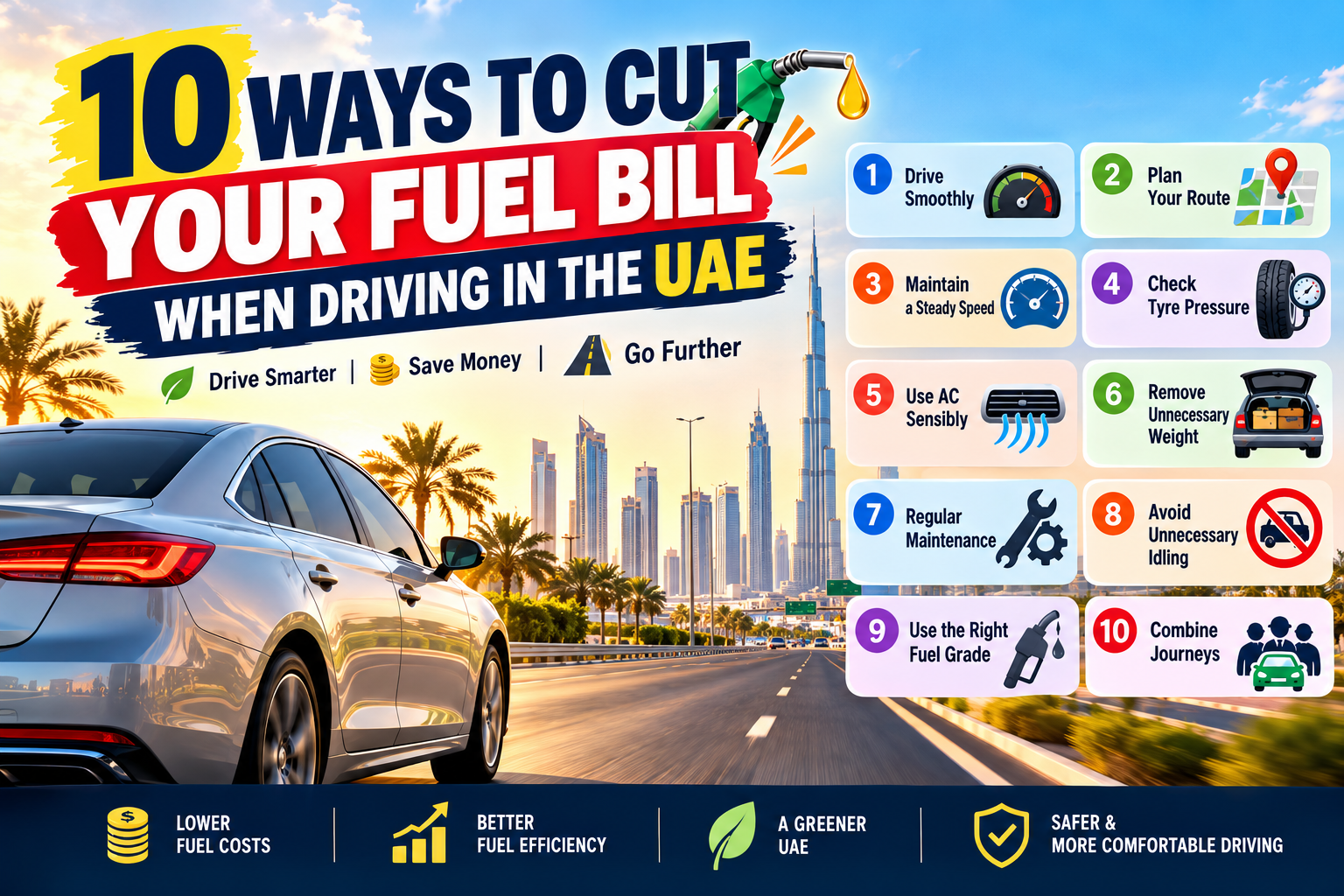
10 practical tips for reducing fuel costs when driving in the UAE, from everyday driving through hot weather and long road trips to busy city streets, will be revealed here. You will also discover what you can do to estimate fuel expenses in AED, what common pitfalls to steer clear of when trying to save on fuel, and ways to see if you are succeeding in saving money.
10 Ways to Cut Your Fuel Bill When Driving in the UAE
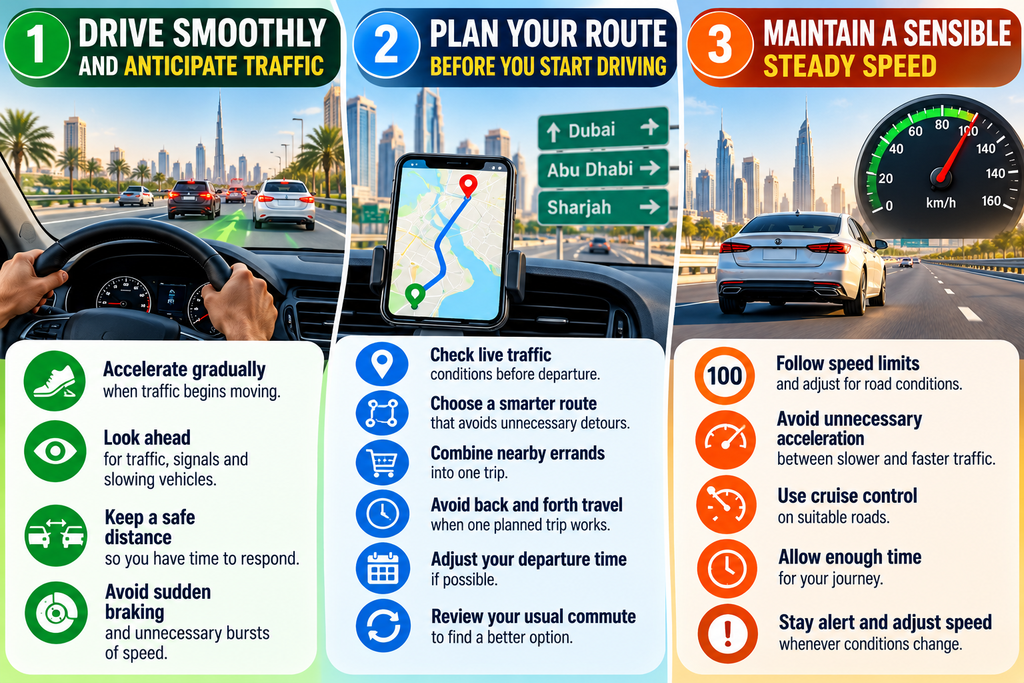
1. Drive Smoothly and Anticipate Traffic
The easiest way to enhance fuel efficiency is to refrain from idle speeding, and using your brakes too much.
If you’re driving at high speeds to accelerate, you need your engine to provide a greater amount of energy to raise your car’s velocity. Energy is lost that could be used more efficiently if you repeatedly accelerate towards vehicles and stop quickly. It can also be applicable in highly congested areas in Dubai, Sharjah, and Abu Dhabi, where traffic riders are compelled to brake and accelerate frequently.
Here’s how to develop smoother driving habits:
- Accelerate slowly as traffic starts to roll.
- Watch for traffic in lines, traffic signals, and slowing cars.
- Leave room to maneuver so you have time to react.
- When it makes sense to anticipate a slowdown, ease off the accelerator.
- Don’t ‘run up the lights’ when not needed.
2. Plan Your Route Before You Start Driving
So longer journeys don’t necessarily require more fuel per km than shorter journeys. Multiple stops, heavy traffic, weather and driving habits are factors that can influence your overall fuel usage. So doing a preliminary check of the route is beneficial.
Routes may become overcrowded in the UAE either during the commuting peak hours or as a result of roadworks, incidents or other disruptions. Also, you can compare routes and check trip durations on a navigation app.
Use these practical strategies:
- Pay attention to circumstances when traffic is still in progress before leaving.
- Pick the logical path to take that doesn’t take too many right turns, or any unnecessary ones.
- Plan multiple errands into a single trip!
- Do not go up and down the street for two trips if one trip on the street can be used.
- If you can make a change to this, you might want to give this flexibility a try.
- Now and then check out your regular commute to determine if it’s more convinent to take a different route.
3. Maintain a Sensible, Steady Speed
The greater your speed, the greater your aerodynamic resistance, the more energy it takes for your car to move through air. Sometimes fuel economy is impacted by frequent acceleration and deceleration.
On UAE highways, travel at a steady speed commensurate with the limit, traffic, weather and road conditions.
Everyone’s ideal speed for fuel savings varies. Fuel consumption depends on several factors, such as the engine design, transmission, vehicle weight, and road conditions.
To enhance your driving habits:
- Obey SIGNALS, devices, and speed limits.
- Do not unnecessarily limit your speed range between slower and faster vehicles.
- Allow enough time for your journey.
- If available, use the cruise control on appropriate roads.
- Be vigilant and slow down if conditions change.
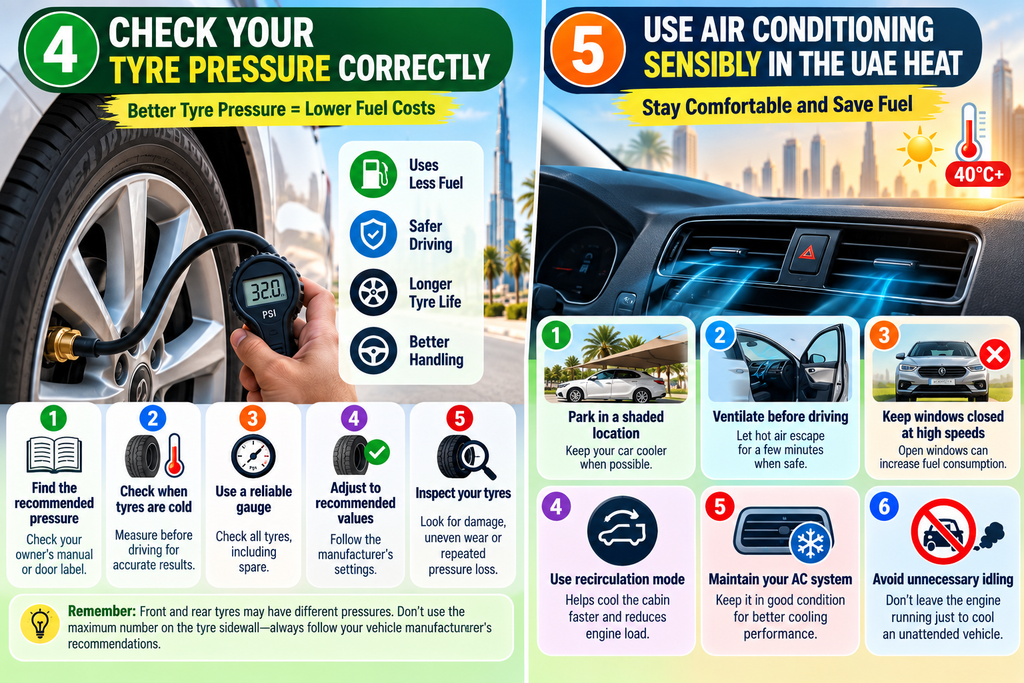
4. Check Your Tyre Pressure Correctly
One of the easily forgotten maintenance tasks is tyres, as they can save fuel and be dangerous as well.
Low pressure in tyres raises rolling resistance. This adds to fuel consumption as the vehicle will require more power to move, which can cause higher fuel use.
Correct tyre pressures help optimize handling and tyre performance. Regular checks are valuable in the UAE, especially as tyres run in a hot climate and can get really hot.
Follow this routine:
- In your owner’s manual, or on the sticker on your tyre, you will find the recommended tyre pressure. This will be on the inside of your driver’s door area.
- Check the pressure when the tyres are cold, preferably before driving.
- Always use a good tyre pressure gauge.
- Adjust the pressure to the specified values by the manufacturer.
- Look for damage, wear or regular pressure loss.
There may be different recommended pressures for front and rear tyres. The correct settings can also vary with the vehicle’s load.
Don’t simply assume that the maximum pressure on the tyre sidewall is the usual riding pressure. Instead, follow the vehicle manufacturer’s suggestions.
5. Use Air Conditioning Sensibly in the UAE Heat
Comfortable driving in UAE involves an important aspect, which is air conditioning, particularly during hot weather in the UAE. It can also be necessary to ensure that the occupants don’t overheat.
Many vehicles’ engines are already working hard, though, and running the A.C. causes them to use more fuel. The impact depends on the driving situation, cooling load, environmental conditions and specific vehicle type. Don’t actually turn down the air conditioner when it is very hot. Rather, make full use of the system responsibly with a comfortable cabin.
Think of these good discipline practices:
- When possible, park in a safe, shaded area.
- When safe and practical, if the cabin is very hot, briefly ventilate the cabin before the trip.
- If open windows allow a lot of aerodynamic drag, get them closed while you are driving along high-speed roads.
- You can use recirculation mode for appropriate vehicles and conditions.
- Ensure the AC system operates when it becomes less efficient.
- NEVER idle a vehicle just for air cooling.
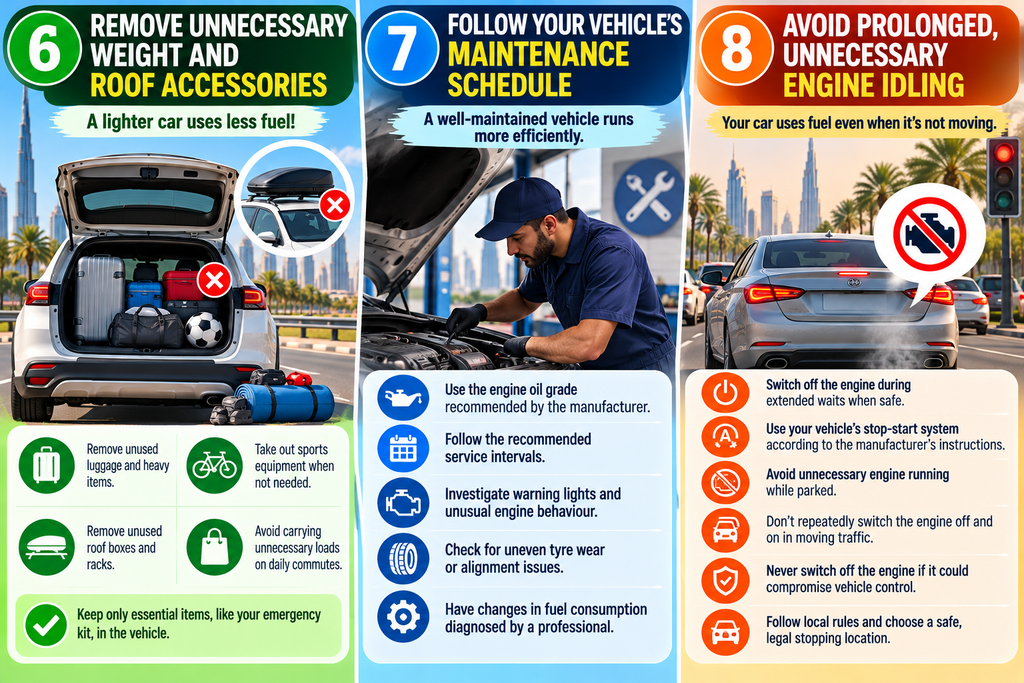
6. Remove Unnecessary Weight and Roof Accessories
Check in the boot of your car. Do you have numerous heavy bags, unused sports equipment, tools, or other objects that you don’t use often?
When dealing with extra weight, the extra amount of energy needed to move it, especially to accelerate it. The impact is different from car to car when fully loaded and under varying driving conditions, and there is no definite rule as to how much impact removing a few items will have so don’t be overly concerned.
Going through a lot of big weights that you don’t need, however, could place unnecessary demand on your joints over time.
Here are the steps you can take:
- Clear away any unused bags of luggage and heavy shopping bags.
- Remove sporting equipment in times of non-use.
- Carry important emergency gear in your car.
- Prune unneeded roof boxes and racks if possible.
- Do not carry more weight than necessary while commuting to and from work.
7. Follow Your Vehicle’s Maintenance Schedule
Increased fuel consumption might not be entirely due to your driving style if your car suddenly begins to use up a lot more gas than it normally does.
Vehicle components that are not operating as designed can cause maintenance issues, which will also contribute to reduced fuel economy. For instance, if the tyres are under-inflated, engine problems, engine oil that is not the correct type, and adverse wheel alignment issues can all cause poor performance.
Following the maintenance schedule used by the manufacturer ensures that your vehicle performs as specified in the design and provides the technician with the chance to discover future problems.
Take special care on these aspects:
- Follow the manufacturer’s recommendation for oil grade.
- Conduct maintenance in accordance with the manufacturer’s service schedule or at the minimum recommended.
- Research warning lights and strange engine noises.
- Look out for uneven tyres or if the car pulls to one side.
- Get an ongoing change in fueling checked out.
- Replace/repair components based on the manufacturer’s instructions.
8. Avoid Prolonged, Unnecessary Engine Idling
Fuel can even flow through your car when it isn’t moving. Running the engine when waiting on a car park outside a building, or for a long time, can use up petrol in a whole car park without any extra distance being covered.
If it is safe to switch off your car’s engine if it is running, it reduces unnecessary fuel consumption, and by now you should know that this engine switch on/off can conserve as much as a litre of fuel every 25 minutes.
Follow these guidelines:
- Use an appropriate and safe method to turn off the engine when waiting for a long period.
- Follow the manufacturer’s guidelines to use the automatic stop-start feature of the car.
- Do not run the engine unnecessarily in a parked vehicle.
- Avoid frequent stop and start whilst travelling.
- Do not turn off the engine in any circumstance that is apt to make it more difficult to control the vehicle.
- Obey local laws and select a safe and legal stopping place!
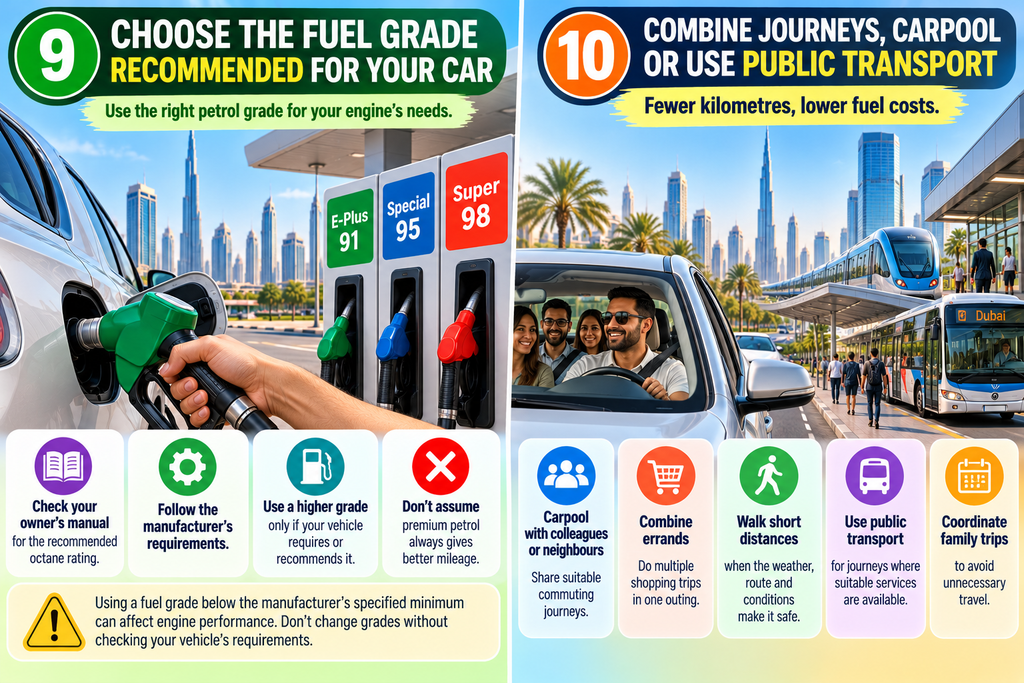
9. Choose the Fuel Grade Recommended for Your Car
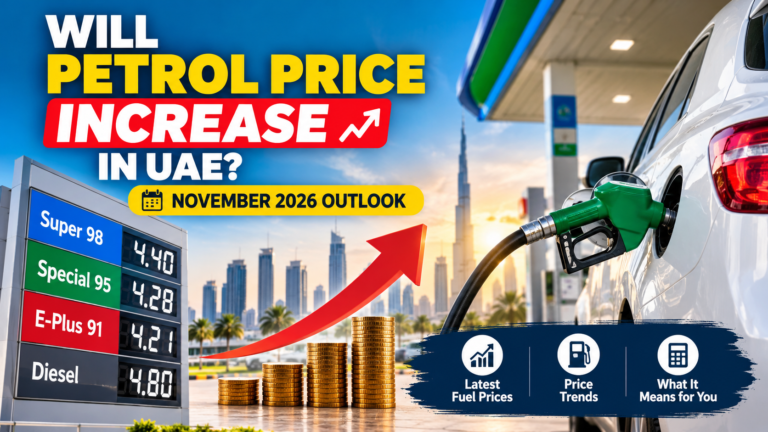
UAE drivers could find themselves using different grades of fuel, such as E-Plus 91, Special 95 or Super 98. While it is important to get the right grade, the car doesn’t necessarily get better fuel economy the higher its pump price.
A fuel’s ‘octane rating’ is a measure of its anti-knock properties. A few engines need high-quality petrol, whereas others are fine with a lower quality. The choice should be based on your car manufacturer’s guidelines.
Before refuelling:
- Refer to the owner’s manual or manufacturer instructions.
- Use an octane number equal to or higher than the specified minimum.
- Use a higher grade if your car needs and/or recommends it.
- Don’t pay premium petrol costs only because you think it’ll offer you better mileage.
Running fuel below the minimum recommended specification will be a problem for the engine. Changes in grade without confirmation of requirements should not be made.
10. Combine Journeys, Carpool, or Use Public Transport
Reducing your overall fuel consumption is sometimes as simple as reducing your distance travelled. If you have to commute on a regular basis or regularly make short trips consider if each trip has to be made separately.
You could:
- Translate appropriate travel experiences with other members of the workgroup or community.
- Get shopping and other errands done together.
- Walk within the distance of a short, safe walk for the weather, path and conditions.
- Use public transport and/or suitable services if they exist for travel.
- Co-ordinate family events to minimise cross-country travel.
How much could you save?
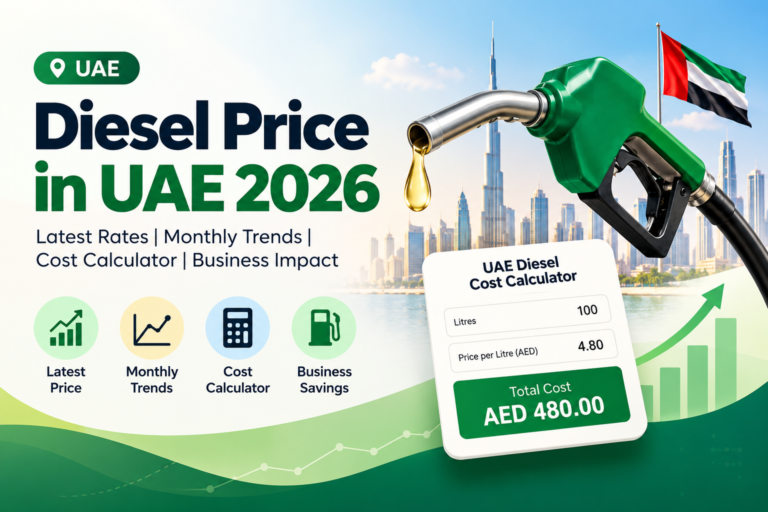
If you drive 50 km a day on 22 days a month in a car using 9 L/100 km, you use about 99 litres a month. Cutting consumption by 10% saves about 10 litres a month, worth 10 litres at AED 4.28 each at this month’s Special 95 price. Use the monthly fuel cost calculator to see your own numbers.
How this is calculated
Fuel needed (L) = distance (km) × consumption (L/100 km) ÷ 100
Fuel cost (AED) = fuel needed × price per litre
Cost per km (AED) = price per litre × consumption ÷ 100
km/L is converted with L/100 km = 100 ÷ km/L. Prices are the official October 2026 retail prices including VAT. Results are estimates; real consumption depends on traffic, speed, air conditioning and load.
Read more: How to Calculate Fuel Cost for a Trip in the UAE
Frequently Asked Questions About Saving Fuel in the UAE
1. Are the UAE car emissions higher when the car is using air conditioning?
Yes, air conditioning can cause higher fuel use because it is a load for your vehicle. These effects depend on the car and the circumstances. Always use recirculation when needed, service the AC system and ensure a pleasant cabin temperature safely during hot weather.
2. Is it fuel saving to use premium fuel?
Not necessarily. In most vehicles, using ‘cleaner-burning petrol’ fuel, higher octanes do not necessarily improve fuel economy. Please consult the owner’s manual and use a fuel grade recommended by the manufacturer.
3. Does using more petrol result from faster driving?
Higher speeds give rise to higher aerodynamic resistance and have the potential to raise fuel usage. Do not break the speed limit or drive too slowly.
4. Does lighter fuel consumption occur when extra weight is removed from an auto?
It can. The more weight you have in a vehicle the more power that will be needed to accelerate the vehicle. Throw away unnecessary but bulky items but retain important safety equipment.
5. Is it petrol saving to turn off the engine when waiting?
Carrying out unnecessary and extended idling can be reduced to save fuel usage. Turn the power off under suitable and safe conditions and as instructed by the vehicle manufacturer.
Final Thoughts
The first step to reducing your fuel costs while driving in the UAE is to make small sustained changes. Dress for your trip, indicated as safety glasses and shoes, air-condition sensibly, drive smoothly and sensibly, keep tyres properly inflated, and stick to your car’s scheduled maintenance schedule. Avoid unnecessary trips and monitor the amount of gasoline used after a few fill-ups to determine what’s best for your car.